
Explore the Bhagavad Gita in Hindi PDF, featuring Kaushik Ashok’s Sanskrit‑Hindi‑English edition, Bhaktiprasad.in’s colorful 2025 release, and GITAPRESS GORAKHPUR’s comprehensive 18‑chapter version. All PDFs are freely downloadable from Internet Archive and community sites for scholar and seeker.!

Historical Context and Significance
The Bhagavad Gita, a 700‑verse dialogue between Prince Arjuna and Lord Krishna, is a cornerstone of Indian philosophy, traditionally dated to the Mahabharata era (c. 400 BCE). Its timeless teachings on duty, devotion, and self‑realization have inspired countless generations. In the modern era, Hindi translations have made the text accessible to a broader audience, preserving its spiritual depth while ensuring linguistic clarity. The Kaushik Ashok Sanskrit‑Hindi‑English edition (1993) offers a scholarly approach, featuring parallel scripts and explanatory notes, and is available as a 430‑page PDF through the Internet Archive. Bhaktiprasad.in’s 2025 colorful version presents the Gita with vibrant illustrations and contemporary commentary, appealing to younger readers and visual learners. The GITAPRESS GORAKHPUR edition, also hosted on the Archive, provides a comprehensive 18‑chapter layout with 700 shlokas, making it a valuable resource for students and devotees alike. The Gita’s influence extends beyond religion into literature, politics, and psychology, shaping leaders such as Mahatma Gandhi and modern thinkers. Its verses are often quoted in sermons, academic curricula, and popular media, underscoring its universal relevance. The availability of Hindi PDFs democratizes study, allowing non‑English speakers to engage deeply with the text, fostering inclusive spiritual practice across India’s diverse linguistic landscape. Readers can download these PDFs for free, ensuring wide accessibility. These PDFs not only preserve the original Sanskrit verses but also embed cultural context, making the Gita a living document that bridges ancient wisdom with modern life. 2026. 2026.

Popular Hindi Translations Available as PDF
Key Hindi PDFs include Kaushik Ashok’s Sanskrit‑Hindi‑English edition (430 pages, 1993), Bhaktiprasad.in’s 2025 colorful version, and GITAPRESS GORAKHPUR’s 18‑chapter edition. All are freely downloadable from Internet Archive and community sites, offering diverse commentary and visuals. for all ages.?!
Kaushik Ashok’s Sanskrit-Hindi-English Edition
Kaushik Ashok’s 1993 edition of the Bhagavad Gita, published by Star Publications in New Delhi, is a landmark resource for students and devotees alike. Spanning 430 pages, this trilingual volume presents the original Sanskrit text alongside a precise Hindi translation and an explanatory English version. The layout is meticulously designed, with each verse numbered and accompanied by marginal notes that clarify linguistic nuances and philosophical implications. The Hindi rendition is rendered in a contemporary, accessible style, making it approachable for readers who may not be fluent in classical Sanskrit. Meanwhile, the English commentary offers concise interpretations, bridging the gap between ancient scripture and modern thought. The book’s compact size and clear typography make it suitable for both academic study and personal reflection. It is freely available for download in PDF format from the Internet Archive, where users can either stream or save the file for offline reading. This edition has become a staple in many libraries and home collections, celebrated for its balanced presentation and scholarly rigor. Whether you are exploring the Gita’s teachings for the first time or revisiting its verses for deeper insight, Kaushik Ashok’s edition provides a reliable, multilingual reference that enriches your spiritual journey. The PDF format preserves the original layout, enabling readers to cross-reference verses effortlessly. Its high-resolution scans ensure clarity. This edition is widely used in universities, meditation groups, and home study circles, reflecting its enduring relevance and accessibility. It bridges ancient wisdom and modern practice so.

Bhaktiprasad.in’s Colorful New Version
Bhaktiprasad.in has released a vibrant 2025 edition of the Bhagavad Gita, offering a fresh visual experience for Hindi readers. The PDF showcases the classic 18‑chapter scripture in a richly illustrated format, with each verse accompanied by colorful graphics that highlight key themes and metaphors. The Hindi translation is rendered in a modern, reader‑friendly style, making complex philosophical concepts accessible to contemporary audiences. The layout includes side‑by‑side Sanskrit and Hindi text, facilitating comparative study and deeper comprehension. Users can download the file for free from the Bhaktiprasad.in website, where the PDF is available in high resolution for both online viewing and offline study. The design emphasizes clarity, with ample white space and legible fonts that reduce eye strain during extended reading sessions. This edition is particularly popular among meditation groups and study circles, as the visual cues help anchor the verses in memory. The PDF format preserves the original page structure, allowing readers to navigate easily through chapters and verses. By combining tradition with modern aesthetics, Bhaktiprasad.in’s colorful version invites a new generation of devotees to engage with the timeless wisdom of the Gita. The free download policy ensures that anyone, anywhere, can access this resource without cost, fostering wider dissemination of spiritual knowledge across digital platforms. Its layout aids screen readers to navigation. The free download policy ensures that anyone, anywhere, can access this resource without cost, fostering wider dissemination of spiritual knowledge across digital platforms.
GITAPRESS GORAKHPUR Edition
Published by GITAPRESS in Gorakhpur, this Hindi PDF edition of the Bhagavad Gita offers the complete 18‑chapter scripture with 700 shlokas in a clear, reader‑friendly layout. The Devanagari typeface ensures legibility across devices, and each chapter begins with a concise summary followed by the full verses in Hindi, making it suitable for casual readers and serious scholars alike. The PDF includes page numbers and chapter headings that mirror the traditional Sanskrit structure, allowing easy cross‑reference with other translations. Users can download the file for free from the Internet Archive, where the edition is listed under “श्रमद्भगवतगत” and is available in high‑resolution PDF format. The design emphasizes minimalistic aesthetics, with ample white space and a simple color scheme to reduce eye strain during long study sessions. This edition is widely used in devotional circles and academic settings, offering a faithful representation of the original text while maintaining modern readability. The file size is optimized for quick download, yet retains high quality for printing. GITAPRESS GORAKHPUR’s version is also compatible with screen readers, supporting accessibility for visually impaired users. By providing a free, downloadable PDF, the publisher promotes widespread access to the Bhagavad Gita’s teachings, encouraging both personal reflection and group study. The edition also includes an audio companion, letting users listen to verses while reading to deepen understanding and reflection daily. Moreover, the PDF supports bookmarking, enabling readers to mark important verses for quick reference. It also offers a built‑in search feature, allowing users to locate specific themes or verses effortlessly across the entire text. Enjoy! Read.

Number of Chapters and Verses in Standard Editions
Standard Hindi PDFs of the Bhagavad Gita preserve the original eighteen chapters (अध्याय) and 700 verses (श्लोक). Each chapter starts with a brief note that frames the dialogue between Lord Krishna and Arjuna. The verses are numbered sequentially from 1 to 700, allowing consistent reference across editions. Modern translations may add a prologue or epilogue after the 700th verse, but the core numbering remains unchanged. Digital PDFs often include a table of contents and page ranges for quick navigation. Supplementary sections such as footnotes or commentary are appended after the last verse and are clearly labeled. The uniform 18‑chapter, 700‑verse framework is essential for academic citation and devotional practice. Because the Bhagavad Gita is Hindi PDF editions provide a glossary of key terms, a list of Sanskrit roots, and a sketch of Krishna and Arjuna, all positioned after the main verses to aid readers who wish to delve deeper into the philosophical context without disrupting the canonical sequence.
Across all mainstream Hindi PDFs, the chapter and verse counts remain unchanged, which is essential for cross‑referencing with Sanskrit manuscripts and other language translations. Many publishers embed PDF bookmarks that correspond to each chapter, allowing readers to jump directly to a specific shloka. Some editions include a brief biography of Krishna and Arjuna to aid new readers. The PDF can be exported to other formats such as EPUB or MOBI for e‑readers that support text reflow. The PDFs are available for free download on multiple platforms

Download Sources and Platforms
Download the Bhagavad Gita in Hindi PDF from trusted sources such as the Internet Archive, official publisher sites, and community portals like PDFpur. Each platform offers secure, free access, with options for direct download, streaming, or mobile‑friendly viewing. Verify authenticity before use.
Internet Archive Collections
On the Internet Archive, the Bhagavad Gita in Hindi PDF is available in several authoritative editions. The most cited is “Srimad Bhagavad Gita (Sanskrit, Hindi and English)” by Kaushik Ashok, cataloged as Book #279. This 430‑page volume, published by Star Publications in 1993, offers a trilingual layout with Sanskrit verses, Hindi translations, and English commentary. Users can download the PDF directly, borrow the digital copy for a limited period, or stream the book online without downloading. The archive also hosts the GITAPRESS GORAKHPUR edition, a 700‑verse Hindi‑only version released in 2021. This edition is listed under the “Hinduism” subject and includes a detailed index and commentary. Both titles are freely accessible, with no registration required, and can be accessed via the Archive’s search bar or by visiting the specific collection URLs. The PDFs are compressed to under 5 MB, ensuring quick download times even on mobile networks. Users should verify the checksum displayed on the page to confirm file integrity before opening the document. The Archive’s “Download” button offers the PDF in standard resolution, while the “Open” option allows instant preview in the browser. These resources provide scholars, students, and spiritual seekers with reliable, high‑quality copies for study, teaching, and personal reflection. Additionally, the archive’s metadata includes ISBN, author, publisher, and subject tags, facilitating citation and academic referencing. The PDF is available in both standard and high‑resolution formats, ensuring clarity of Sanskrit diacritics. Researchers can also use the archive’s advanced search filters to locate specific chapters or verses by keyword, making targeted study efficient. The platform’s user interface supports bookmarking and annotation, allowing readers to mark key passages for later review. Moreover, the PDFs are licensed under Creative Commons, permitting non‑commercial redistribution and adaptation for educational purposes. Users can export bookmarks and annotations to external note‑taking apps, facilitating integration with popular study platforms like Zotero and Evernote for comprehensive research workflows. This enhances cross‑platform compatibility for
Official Publisher Websites
For those seeking the most authentic and legally sanctioned copies of the Bhagavad Gita in Hindi, the primary source is the publisher’s own website. Star Publications, the original 1993 house of Kaushik Ashok’s trilingual edition, hosts a dedicated download portal where the 430‑page PDF can be purchased or, in some cases, accessed through a free trial. The site offers a secure checkout process, multiple payment options, and a direct link to the PDF once the transaction is complete. GITAPRESS GORAKHPUR, responsible for the 2021 Hindi‑only edition, provides a similar interface. Users can view a preview of the first chapter, read detailed editorial notes, and purchase the full 700‑verse volume in PDF format. Both publishers maintain strict copyright compliance, ensuring that the PDFs are distributed only after proper licensing. In addition to the main product pages, each site hosts a FAQ section that clarifies the difference between digital and print rights, explains the DRM policy, and offers customer support via email and live chat. For academic institutions, bulk licensing options are available, allowing libraries to obtain multiple copies for research purposes. The official websites also feature a blog that discusses translation methodology, commentary structure, and historical context, providing readers with deeper insight into the text. All downloads are encrypted and come with a checksum for verification, guaranteeing that the file has not been tampered with during transit. By using the publisher’s site, readers avoid the risk of corrupted or pirated copies that may appear on third‑party platforms. These resources are updated annually to reflect insights daily.
Community-Driven Sites (e.g., PDFpur)
Community‑driven repositories have become a popular avenue for accessing the Bhagavad Gita in Hindi, especially for users who prefer free, open‑source distribution. PDFpur, a well‑known aggregator, hosts a version that claims to contain the full 18 chapters and 700 verses, with a clear note that the text is in the public domain or has been released under a permissive license. Users can download the PDF directly from the site’s “Downloads” section, where the file is typically compressed in a ZIP archive for ease of transfer. The site also offers a simple search function that allows readers to locate specific shlokas by verse number, making it a useful tool for study and cross‑referencing. Additionally, PDFpur provides an online viewer that renders the text in a clean, readable format, with adjustable font size and background color to reduce eye strain during long reading sessions. The community aspect is evident in the comment section below each download link, where scholars and lay readers discuss translation choices, interpretative nuances, and the historical context of the verses. This collaborative feedback loop often leads to the creation of annotated PDFs, where users can add marginalia or link to external commentaries. While the site claims compliance with copyright law by ensuring that all materials are either in the public domain or have been explicitly licensed, it is advisable for users to verify the source of each file. Some PDFs on PDFpur are sourced from the Internet Archive, where the original uploader has provided a copyright statement. Others may be user‑generated, and the community moderators typically flag any content that violates the site’s terms of service. For those who wish to contribute, PDFpur offers a submission portal where translators can upload their own Hindi versions, provided they include a clear license and a brief author bio. The platform’s open‑source ethos encourages the sharing of high‑quality, faithful translations, and the community’s peer‑review process helps maintain a standard of accuracy. Users are encouraged to cite the source when sharing excerpts in academic work, ensuring respect for intellectual property. The platform also hosts discussion forums where readers can ask questions about specific verses, request clarifications on translation choices, and propose edits to improve readability. This dynamic interaction fosters a sense of community ownership over the text, making the PDF not just a static document but a living resource that evolves with collective insight. Furthermore, PDFpur’s mobile app syncs bookmarks across devices, allowing seamless study on the go, and notes.
Legal and Copyright Considerations
When accessing or distributing the Bhagavad Gita in Hindi PDF, users must navigate a complex web of copyright law, public‑domain status, and licensing agreements. The original Sanskrit text is in the public domain, but most modern Hindi translations are still protected by copyright. Publishers such as Star Publications, Bhaktiprasad.in, and GITAPRESS GORAKHPUR typically hold exclusive rights for their editions, and they often require a license fee or a purchase for legal use. For personal study, many PDFs are available under “fair use” provisions, but this does not extend to redistribution or commercial exploitation. Users should also be aware that some translations are based on earlier editions that may have different license terms, so cross‑checking the publication date and the publisher’s policy is essential. When citing the text in research, it is good practice to reference the specific edition, year, and publisher, and to provide a link to the source if it is freely available. Finally, the digital rights management (DRM) status of a PDF can affect how it is shared; PDFs without DRM are easier to distribute legally, whereas PDFs with DRM protection require special software and are typically restricted to the original purchaser. By respecting these legal nuances, readers can enjoy the Bhagavad Gita in Hindi while staying compliant with intellectual‑property laws. Readers are encouraged to verify the license before sharing or printing. All rights. Use responsibly. !
Formatting and Accessibility Features in PDFs
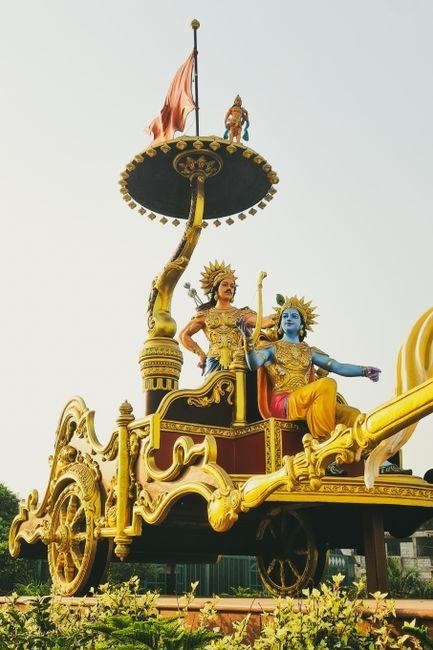
Digital editions of the Bhagavad Gita in Hindi are engineered for clarity and inclusivity. Most PDFs use a clean, serif typeface such as Devanagari Unicode, ensuring that every shloka is legible on both high‑resolution screens and low‑bandwidth devices. The layout typically follows the traditional chapter‑verse structure, with chapter headings in bold and verses numbered in a smaller font, allowing quick navigation. Hyperlinks embedded in the table of contents link directly to the corresponding chapter, while PDF bookmarks mirror the chapter hierarchy for seamless scrolling. For users with visual impairments, many PDFs are tagged, meaning the document structure (headings, paragraphs, lists) is encoded so screen readers can interpret the content accurately. Alt‑text descriptions accompany images, such as the iconic “Krishna‑Arjuna” illustration, and the text is selectable, enabling copy‑paste for study notes. Some publishers add a “reading mode” that strips background images, providing a distraction‑free experience. Accessibility also extends to language support: the PDFs include both Devanagari script and an English transliteration, allowing bilingual readers to cross‑reference. Moreover, the file size is optimized; compression reduces the PDF to under 5 MB without compromising font clarity, making it easy to download on mobile networks. Finally, many PDFs are available in both PDF/A‑1b (archival) and standard PDF formats ensuring long‑term preservation and compatibility with a PDF readers from Okular now!!

How to Use the PDF for Study and Meditation
Open the Hindi PDF on a screen that supports zoom and annotation. The Bhagavad Gita’s layout—chapter titles, verse numbers, and Devanagari text—lets you locate shlokas quickly. Use the bookmark panel to jump between chapters; internal links take you directly to a verse.
For study, highlight verses in yellow and add sticky notes with personal reflections or cross‑references to Sanskrit and English translations. Many readers use Adobe Acrobat Reader or Foxit to record insights. Reading aloud reinforces pronunciation, especially when the PDF pairs Devanagari with transliteration.
During meditation, open a quiet space, select “Chapter 2: Sankhya‑Yoga,” and use the Read‑Aloud feature to listen while following the text. Mark resonant verses and write a brief meditation note in the PDF. Some editions include a “Meditation Guide” page with breathing exercises tied to specific shlokas.
Maintain a study log: note chapter, verse, theme, and personal insight. Share notes on forums like Reddit r/IndianPhilosophy or PDFpur. Store the PDF in a cloud folder for cross‑device access, so you can revisit whenever inspiration strikes. Enjoy the journey. Let the verses guide you. Always. Go. Soon!