
Upper Body Resistance Band Workout PDF: A Comprehensive Plan
Discover a detailed PDF guide for sculpting your upper body using resistance bands! This plan offers effective workouts, adaptable for all fitness levels,
and convenient for home training.
Resistance band training presents a fantastic, accessible method for building upper body strength without bulky equipment. These versatile tools provide variable resistance, challenging muscles throughout a full range of motion. Unlike traditional weights, bands are portable, affordable, and suitable for all fitness levels.
They’re ideal for home workouts, travel, or supplementing gym routines. Bands effectively target chest, back, shoulders, biceps, and triceps, promoting muscle growth and improved definition. Don’t underestimate their power – studies show comparable results to weight training!
Benefits of Upper Body Resistance Band Workouts
Upper body resistance band workouts offer numerous advantages. They enhance muscular endurance, strength, and flexibility, promoting better posture and functional movement. Bands are joint-friendly, making them suitable for rehabilitation or individuals with limitations.
Their portability allows for workouts anywhere, anytime, eliminating gym barriers. Resistance bands are cost-effective compared to weights, and the variable resistance challenges muscles differently. They’re also excellent for defining muscle tone and improving overall upper body aesthetics.
Choosing the Right Resistance Bands
Selecting the appropriate resistance bands is crucial for maximizing workout effectiveness and safety. Consider your current fitness level; beginners should start with lighter resistance. Bands come in varying levels, often color-coded for easy identification.
Evaluate the band type – tube bands with handles, loop bands for legs/arms, or figure-8 bands for versatile exercises. Prioritize quality; check for durability and resistance to snapping. Ensure the bands are latex-free if you have allergies.
Resistance Levels Explained
Resistance bands typically range from extra-light to extra-heavy, each offering a different level of challenge. Extra-light bands are ideal for rehabilitation or beginners, providing minimal resistance. Light bands are suitable for warm-ups and light toning.
Medium and heavy bands are excellent for building strength and muscle endurance. Extra-heavy bands are for advanced users seeking intense resistance. Progress gradually, increasing resistance as you get stronger to continually challenge your muscles.
Types of Resistance Bands (Tube, Loop, Figure 8)
Resistance bands come in various forms, each suited for different exercises. Tube bands with handles are versatile for chest presses and rows. Loop bands (mini bands) are excellent for lateral walks and shoulder exercises, focusing on stabilization.
Figure 8 bands provide progressive resistance and are great for rotational movements and rehabilitation. Choosing the right type depends on your workout goals and preferred exercises. Consider a variety pack for maximum versatility!
Warm-up Exercises for Upper Body
Prioritize a thorough warm-up to prepare your muscles for resistance band training! Begin with dynamic stretches like arm circles – forward and backward – to increase blood flow and range of motion. Incorporate shoulder rotations, gently moving your arms in circular patterns.
Light band pull-aparts are also beneficial. A proper warm-up minimizes injury risk and enhances workout effectiveness. Spend 5-10 minutes warming up before each session, focusing on the muscles you’ll be targeting.
Dynamic Stretching for Shoulders
Prepare your shoulder joints with dynamic stretches! Perform arm circles – small, then gradually larger – both forward and backward, for 10-15 repetitions each direction. Include shoulder rotations, gently rolling your shoulders forward, upward, backward, and downward.
Cross-body arm swings are also effective; swing one arm across your body, then the other. These movements increase blood flow, improve flexibility, and enhance shoulder mobility, crucial for safe and effective resistance band exercises.
Arm Circles and Rotations
Enhance shoulder joint preparation with focused arm circles and rotations! Begin with small, controlled forward arm circles, gradually increasing the diameter for 15 repetitions. Repeat in the reverse direction. Next, perform shoulder rotations – gently roll shoulders forward ten times, then backward ten times.
These dynamic movements improve range of motion, warm up the rotator cuff muscles, and prepare your upper body for the demands of resistance band training, minimizing injury risk and maximizing workout effectiveness.

Chest Exercises with Resistance Bands
Target your pectoral muscles effectively with resistance band chest exercises! Resistance Band Chest Press mimics a traditional bench press, anchoring the band behind you and pressing forward. Resistance Band Flyes, also anchored, involve extending arms out to the sides, squeezing the chest muscles.
Focus on controlled movements and proper form to maximize muscle engagement. These exercises build chest strength and definition, offering a versatile alternative to weights, perfect for home workouts.
Resistance Band Chest Press
Perform the Resistance Band Chest Press by securely anchoring the band behind your back, at chest height. Grip the handles with palms facing forward, and step forward to create tension. Press your arms straight out in front of you, mimicking a bench press motion, squeezing your chest muscles.

Slowly return to the starting position, maintaining control throughout the exercise. Focus on keeping your elbows slightly bent and core engaged for stability. This exercise effectively targets the pectoral muscles, building strength and definition.
Resistance Band Flyes
Execute Resistance Band Flyes by stepping on the center of the resistance band, holding one end in each hand. Maintain a slight bend in your elbows throughout the movement. Open your arms out to the sides in a wide arc, feeling a stretch in your chest.
Squeeze your chest muscles to bring your hands back together in front of your body. Control the movement, avoiding locking your elbows. This isolates the chest muscles, promoting a fuller, more sculpted appearance.

Back Exercises with Resistance Bands
Strengthen your back with versatile resistance band exercises! Resistance Band Rows, performed seated or standing, target the upper and mid-back muscles. Anchor the band securely and pull towards your torso, squeezing your shoulder blades together.
For a more advanced challenge, try Resistance Band Lat Pulldowns. Securely anchor the band overhead and pull down towards your chest, mimicking a lat pulldown machine. These exercises improve posture and build a strong, defined back.
Resistance Band Rows (Seated & Standing)
Perform resistance band rows to effectively target your back muscles. Seated rows offer stability, while standing rows engage your core further. Secure the band under your feet or an anchor point. Maintaining a straight back, pull the band towards your torso, squeezing your shoulder blades.
Keep your elbows close to your body throughout the movement. Control the release, resisting the band’s pull. Aim for 10-15 repetitions per set, focusing on proper form for optimal results and injury prevention.
Resistance Band Lat Pulldowns (Anchored)
Simulate a lat pulldown using a resistance band anchored overhead – a sturdy door frame works well with appropriate attachments. Grip the band with an overhand grip, slightly wider than shoulder-width. Pull the band down towards your upper chest, keeping your back straight and core engaged.
Focus on squeezing your lat muscles during the pull. Control the upward movement, resisting the band’s tension. Perform 10-15 repetitions for 3-4 sets, adjusting band resistance to match your strength level.
Shoulder Exercises with Resistance Bands
Strengthen and sculpt your shoulder muscles with a versatile range of resistance band exercises. Target all three deltoid heads – anterior, medial, and posterior – for balanced development. Incorporate lateral raises, front raises, and overhead presses into your routine.
Focus on controlled movements and proper form to maximize effectiveness and prevent injury. Adjust band resistance to challenge yourself while maintaining good technique. Perform 3-4 sets of 12-15 repetitions for each exercise.
Resistance Band Lateral Raises
Stand on the resistance band with feet shoulder-width apart, holding the handles with palms facing your body. Keep a slight bend in your elbows and raise your arms out to the sides until they reach shoulder height.
Focus on using your shoulder muscles to lift the weight, not momentum. Slowly lower your arms back to the starting position. Complete 3-4 sets of 12-15 repetitions. Ensure controlled movements to isolate the medial deltoids effectively;
Resistance Band Front Raises
Stand on the resistance band, feet shoulder-width apart, gripping the handles with palms facing your thighs. Maintain a slight bend in your elbows and slowly raise one arm straight in front of you to shoulder height.
Concentrate on controlled movement, engaging your anterior deltoids. Lower the arm back down with control, avoiding any jerky motions. Perform 3-4 sets of 12-15 repetitions per arm. Focus on isolating the front shoulder muscles for optimal results.
Resistance Band Overhead Press
Stand on the center of the resistance band, feet shoulder-width apart, and grip the handles with palms facing forward. Keep your core engaged and back straight. Press the band upwards, extending your arms overhead until they are almost fully locked out.
Focus on controlled movement, squeezing your shoulder muscles at the top. Slowly lower the band back to the starting position. Complete 3-4 sets of 10-12 repetitions. Ensure proper form to avoid injury and maximize shoulder development.
Bicep Exercises with Resistance Bands
Strengthen and tone your biceps effectively with resistance bands! These exercises offer a versatile alternative to traditional weights, perfect for home workouts. Focus on controlled movements and maintaining proper form throughout each repetition. Resistance band bicep curls and hammer curls are excellent choices.
Adjust the band tension to match your fitness level. Perform 3-4 sets of 10-15 repetitions for each exercise. Remember to engage your core and keep your elbows close to your body for optimal results.
Resistance Band Bicep Curls
Stand on the resistance band with feet shoulder-width apart, holding the handles with palms facing forward. Keep your elbows close to your sides and curl the band upwards, squeezing your biceps at the top of the movement.
Slowly lower the band back to the starting position, maintaining control throughout. Aim for 3-4 sets of 12-15 repetitions. Adjust band tension by changing your foot placement for increased or decreased resistance; Focus on a full range of motion for maximum bicep activation.
Hammer Curls with Resistance Bands
Stand on the resistance band, feet shoulder-width apart, gripping the handles with palms facing each other – like holding hammers. Maintain a neutral wrist position throughout the exercise. Curl the band upwards towards your shoulders, keeping your elbows close to your body.
Squeeze your biceps and forearms at the peak contraction. Slowly lower the band back down with control. Perform 3-4 sets of 12-15 repetitions. Adjust resistance by altering foot placement. This variation targets both biceps and brachialis muscles.
Tricep Exercises with Resistance Bands
Strengthen and tone your triceps with versatile resistance band exercises! Focus on controlled movements to maximize muscle engagement. Resistance bands offer a convenient way to target the back of your arms, enhancing upper body definition. Explore variations like overhead extensions and kickbacks.
These exercises require minimal space and equipment, making them ideal for home workouts. Proper form is crucial to prevent injury and achieve optimal results. Incorporate these into your routine for sculpted, powerful arms!

Resistance Band Tricep Extensions (Overhead & Kickbacks)
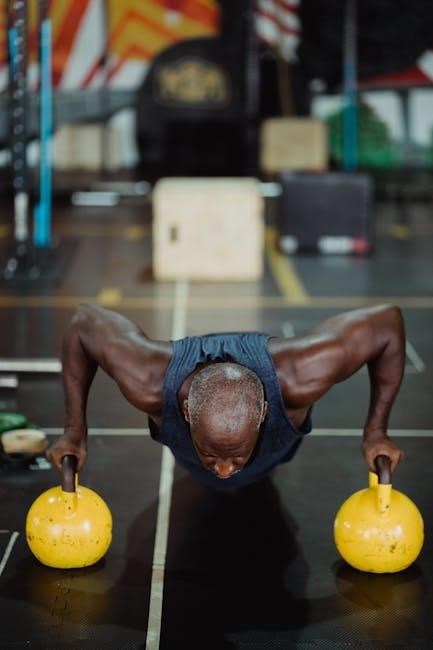
Perform overhead extensions by securing the band under your feet, holding the other end, and extending your arms upwards, focusing on isolating the triceps. For kickbacks, hinge at the hips, keeping your upper arm stationary, and extend your forearm back, squeezing the tricep.
Maintain a controlled tempo throughout both exercises. Ensure elbows remain stable and close to your head during overhead extensions. Kickbacks benefit from a slight bend in the elbow. These target the triceps effectively, building strength and definition.
Resistance Band Tricep Pushdowns
Anchor the resistance band securely overhead, utilizing a door anchor or sturdy object. Grasp the band with an overhand grip, keeping elbows tucked close to your body. Extend your forearms downwards, focusing on contracting the triceps muscle.

Maintain a controlled movement, resisting the band’s pull on the return. Avoid swinging your body or using momentum. Focus on squeezing the triceps at the bottom of the movement. This exercise effectively isolates and strengthens the triceps, contributing to upper arm definition.
Workout Structure & Sets/Reps
Structure your resistance band workouts with a focus on progressive overload. Beginners should aim for 2-3 sessions per week, performing 2-3 sets of 10-12 repetitions for each exercise. Intermediate lifters can increase to 3-4 sessions, with 3-4 sets of 12-15 reps.
Advanced individuals may benefit from 4-5 sessions, incorporating 4 sets of 15-20 repetitions, or utilizing drop sets and supersets. Rest for 60-90 seconds between sets. Prioritize proper form over the number of repetitions.
Beginner Workout Routine
Start with a full-body approach, focusing on mastering form. Perform 2 sets of 10-12 repetitions for each exercise. Include Resistance Band Chest Press, Seated Rows, Lateral Raises, Bicep Curls, and Tricep Extensions. Rest for 60 seconds between sets.
Focus on controlled movements and proper posture. Warm-up with dynamic stretches and cool-down with static stretches. Gradually increase resistance as you gain strength. Listen to your body and adjust as needed.
Intermediate Workout Routine

Elevate your training with increased intensity and volume. Perform 3 sets of 12-15 repetitions for each exercise. Incorporate Resistance Band Flyes, Standing Rows, Front Raises, Hammer Curls, and Tricep Kickbacks. Reduce rest periods to 45 seconds between sets.
Introduce supersets – pairing opposing muscle groups. Focus on maintaining proper form throughout. Consider adding a plyometric element to some exercises. Monitor your progress and adjust resistance accordingly. Prioritize controlled movements and full range of motion.
Advanced Workout Routine
Challenge your limits with high-volume, complex sets. Execute 4 sets of 15-20 repetitions, utilizing heavier resistance bands. Implement drop sets and circuit training for maximum muscle fatigue. Combine exercises like Banded Chest Press with immediate Banded Rows.
Introduce unilateral movements – working one side at a time. Minimize rest periods to 30-45 seconds. Focus on explosive movements with controlled eccentric phases. Incorporate advanced techniques like paused reps and isometric holds. Track your performance meticulously.
Proper Form and Technique
Prioritize controlled movements over speed to maximize muscle engagement and minimize injury risk. Maintain a neutral spine and engaged core throughout each exercise. Avoid using momentum; focus on contracting the target muscle group. Breathe consistently – exhale during exertion and inhale during the release phase.
Keep elbows slightly bent during extensions to protect joints. Ensure bands are securely anchored and free from tears before each set. Visualize proper form and monitor yourself in a mirror. Listen to your body and stop if you experience pain.
Maintaining Correct Posture
Engage your core muscles throughout each exercise to stabilize your spine and prevent lower back strain. Keep your shoulders relaxed and down, avoiding shrugging or rounding forward. Maintain a neutral head position, looking straight ahead, not up or down.
Avoid arching or flattening your back; aim for a natural spinal curve. Ensure your chest is lifted and your hips are aligned. Proper posture maximizes muscle activation and reduces the risk of injury during resistance band training. Focus on alignment before adding resistance.
Controlled Movements & Breathing
Perform each resistance band exercise with slow, deliberate movements, focusing on muscle contraction. Avoid using momentum or jerking motions, which can reduce effectiveness and increase injury risk. Exhale during the exertion phase of the exercise – when you’re actively pulling or pushing against the band.
Inhale during the release or return phase. Consistent breathing helps maintain proper form and provides oxygen to working muscles. Concentrate on feeling the targeted muscles engage throughout the entire range of motion. Prioritize quality over speed.
Safety Precautions When Using Resistance Bands

Always inspect resistance bands before each use for any cracks, tears, or signs of wear. Discard damaged bands immediately to prevent snapping. Secure the band properly before starting any exercise, ensuring a firm anchor point. Avoid overstretching the band beyond its recommended limit.
Be mindful of your surroundings and ensure sufficient space to move freely. Never allow the band to snap back towards your face. If you have a latex allergy, use latex-free bands. Prioritize proper form to minimize risk of injury.
Checking Band Integrity
Before each workout, meticulously examine your resistance bands for any visible damage. Look closely for cracks, cuts, or tears – even small imperfections can compromise the band’s strength. Feel the band’s surface for any bulges or weak spots; Test the band by gently stretching it; listen for any snapping sounds.
If any damage is detected, immediately discontinue use and replace the band. Regular inspection is crucial for safety, preventing potential injuries from band failure during exercise. Remember, a compromised band poses a significant risk.
Avoiding Snapping Hazards
Always maintain a firm grip on the resistance band during exercises, keeping hands and fingers clear of the direct snap-back path. Never overstretch the band beyond its recommended limit; this significantly increases the risk of breakage. Ensure adequate clearance around you, free from obstructions or people.

Wear protective eyewear, especially when performing exercises with a high snap-back potential. Avoid using damaged or worn bands, as they are more prone to snapping. Prioritize safety by focusing on controlled movements and proper form.
Cool-down and Stretching
Following your resistance band workout, a proper cool-down is crucial for muscle recovery and flexibility. Incorporate static stretches, holding each stretch for 20-30 seconds, focusing on the chest, back, shoulders, biceps, and triceps.
Examples include cross-body arm stretches, tricep stretches, and shoulder stretches. Gentle stretching helps reduce muscle soreness and improves range of motion. Remember to breathe deeply throughout each stretch, promoting relaxation and enhancing the benefits of your cool-down routine.
Static Stretching for Upper Body Muscles
Enhance recovery with targeted static stretches. Hold each stretch for 20-30 seconds, feeling a gentle pull, not pain. Include cross-body shoulder stretches, tricep stretches (reaching elbow towards the ceiling), and chest stretches (clasp hands behind back, gently lifting arms);
Also perform bicep stretches (extending arm, palm up, gently pulling fingers back) and upper back stretches (hugging knees to chest). Focus on deep, controlled breathing during each stretch to maximize muscle relaxation and flexibility gains.
Creating a Printable PDF Workout Plan
Compile your favorite exercises and workout routines into a convenient PDF format. Utilize word processing or design software to create a visually appealing and easy-to-follow plan. Include exercise names, sets, reps, and rest times.
Add clear images or illustrations demonstrating proper form. Ensure the PDF is optimized for printing, with clear text and appropriate margins. Save the file and print for a tangible workout companion, perfect for the gym or home use!
Resistance Band Workout Progression
Gradually increase the challenge as you get stronger! Begin with lighter bands and higher repetitions. Progress to heavier bands or shorter band lengths as exercises become easier. Consider increasing sets, decreasing rest times, or adding more complex movements.
Introduce variations like slowing down the tempo or incorporating pauses. Regularly assess your strength and adjust the resistance accordingly. Consistent progression is key to continued muscle growth and improved fitness!
Combining Resistance Bands with Other Exercises
Enhance your upper body workouts by integrating resistance bands with traditional exercises! Pair bands with bodyweight movements like push-ups or dips for added intensity. Use them to pre-activate muscles before lifting weights, improving form and stability.
Incorporate bands during cable machine exercises for variable resistance. Combine with free weights for a hybrid approach, maximizing muscle engagement. Remember to prioritize proper form and controlled movements for optimal results and injury prevention.
Resources for Further Learning
Expand your knowledge with readily available online tutorials and videos demonstrating proper resistance band techniques. Explore platforms like YouTube for guided workouts and form corrections. Discover reputable resistance band brands – TheraBand, Fit Simplify, and Bodylastics – known for quality and durability.
Consult fitness websites and blogs for workout ideas and expert advice. Consider seeking guidance from a certified personal trainer for personalized plans. Remember to prioritize credible sources and safe exercise practices.
Online Tutorials and Videos
YouTube is a treasure trove of resistance band workout videos, offering demonstrations for all muscle groups. Search for channels specializing in fitness and strength training, focusing on upper body exercises. Explore beginner-friendly tutorials to master proper form and technique before progressing.
Fitness websites often embed instructional videos alongside written guides. Look for content created by certified trainers to ensure accuracy and safety. Utilize these visual aids to enhance your understanding and maximize workout effectiveness.
Recommended Resistance Band Brands
TheraBand is a widely recognized and trusted brand, known for its color-coded resistance levels and durability, often used in rehabilitation settings. Fit Simplify offers a popular, affordable set with varying resistance, ideal for beginners. Bodylastics provides a more advanced system with stackable bands and attachments for customized workouts.
Serious Steel Fitness is favored by experienced users for its high-quality, heavy-duty bands. RENPHO offers a versatile kit including door anchors and handles, enhancing exercise variety. Consider your fitness level and budget when selecting a brand.